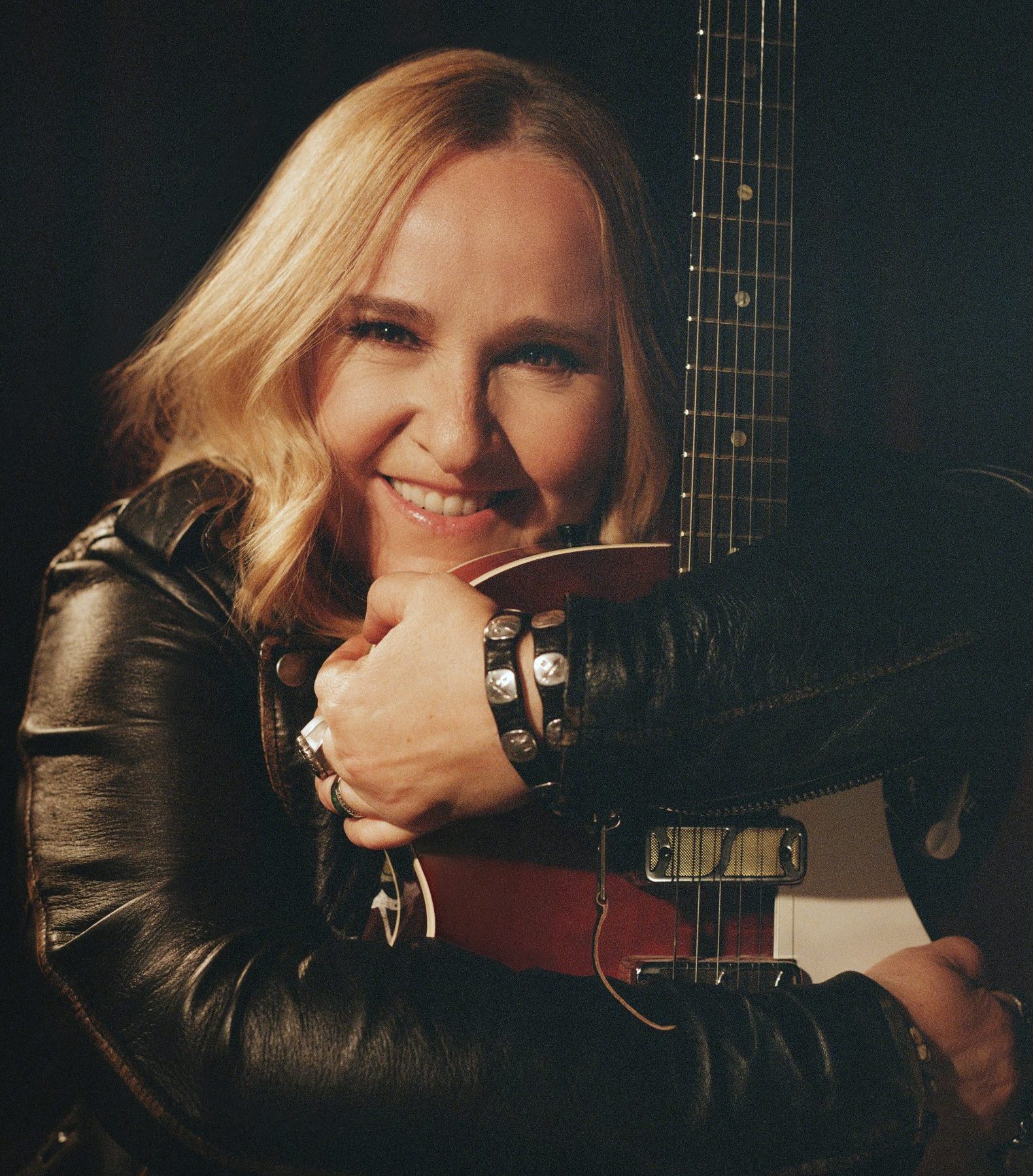
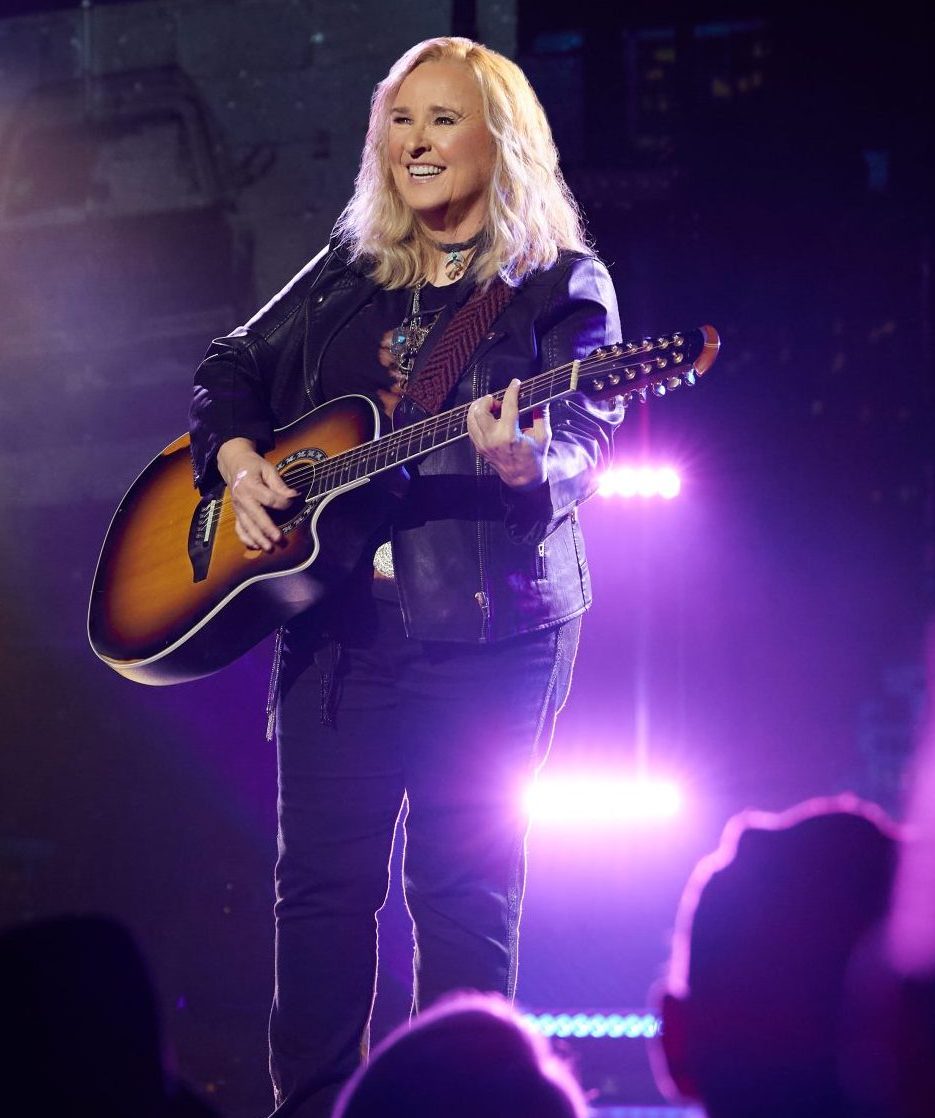
When a Rockstar wants to do a theatre piece you hope it’s going to be good; that they make the leap to a new genre and take it seriously. Melissa Etheridge’s show, My Window: A Journey Through Life currently running at New World Stages, delivers. It is intelligently conceived, well-written (Melissa Etheridge, LindaWallem-Etheridge), with lush sound design (Colle Bustin), stunning projections (Olivia Sebesky), on-point direction (Amy Tinkham), and lighting (Abigail Rosen Holmes) that manages to speak the visual languages of rock concert and Off-Broadway theatre equally. And for cabaret audiences, the intimacy of strong storytelling wedded to song, is really exciting to see in a performer like Etheridge, whose authenticity and thousands of hours on stage make her an absolute natural pivoting to longer narratives. And that voice! There were moments when the sheer guts, power, and conviction of that seasoned raspy sound left me floored. Etheridge’s Journey is also very funny, offering a lighthearted take on the singer-songwriter’s success, managing to avoid sentimentality in the first half by being well-seasoned with plenty of honesty and salty comedy.
You won’t want to miss Cirque du Soleil alum, fearless comedian Kate Owens, rocking out European-style physical comedy as a guitar tech, one-woman Greek chorus, or yoga-bunny, or just slipping in and out of the shadows as a supportive stagehand, masterfully in control of the presence she has on stage.
Snippets of covers that documented Etheridge’s musical journey include “Folsom Prison Blues” (Johnny Cash) from one of her earliest gigs entertaining inmates, “Day by Day” (Stephen Schwartz, John-Michael Tebelak) from her musical theatre phase, and “On Broadway” (Barry Mann, Cynthia Weil with Jerry Leiber, Mike Stoller)—which I’m now convinced should always be sung with the kind of attack and crisp rhythm Etheridge brings to it. “Piece of My Heart” (Jerry Ragovoy, Bert Berns), which Etheridge covered in the 2005 Grammys, still sounds iconic; she’s an obvious heir to the Janis Joplin sound.
(Photo: Jenny Anderson)
Etheridge’s own songwriting was prominent, and well-situated in the storyline: the songs illuminated where she was in her life when she wrote them, how they were part of building a career, and sometimes they popped up in even more creative ways. “Meet Me in the Back” was a great example of the light touch of the first half, where—in this most overtly passionate, sensual song sung with conviction—Owens is pure comedy in the background as a messed up but very enthusiastic fan in the bar where Etheridge is playing. Here we get to see Etheridge’s creative integrity, her pride and confidence in her sexuality, set in contrast to the distracting world around her, showing her perseverance over so many years. “I Wanna Come Over,” Etheridge’s contribution to the borderline stalker-level passion that comes up in classic rock and joins the ranks of “Every Breath You Take” (Sting) and “I’m on Fire” (Bruce Springsteen). “Somebody Bring Me Some Water,” Etheridge’s huge hit from 1988, sounds completely fresh, as if Etheridge just discovered that afternoon that the love of her life is cheating on her. She must have sung that song countless times, but it still sounds alive. “Nowhere to Go” was especially poignant, with the lyrics making a strong statement about what it is to be a lesbian in a culture that makes you invisible or a target: “You might as well scream/They never woke up/From the American dream/And they don’t understand/What they don’t see/And they look through you/And they look past me.”
Now this could have been—I wanted it to be!— a rave review, so it’s hard to tell you this, because you should definitely go and see this beautiful show, but there’s a moment in the second act where the bubble burst and I lost trust in something I was really enjoying. It’s not because tragedy struck in the story of Etheridge’s life, although it did (and understandably, it remains incredibly traumatizing for their whole family). It’s because the story suddenly pushed us as an audience to take her side in a conflict. The themes established in the first act—Etheridge learning confidence in her unique artistic, personal, and spiritual expressions—were repurposed to bring us to a point where we were invited to see her story as evidence that she was not to blame. This turn was problematic, because what had already been established had felt so authentic and was full of three-dimensional humor, creativity, pride, hard work, and humility—and suddenly it became more of a two-dimensional morality play; one in which I was uncomfortable taking sides. The change in tone was tough to resolve dramatically, and it led to a glossed-over conclusion about believing in yourself. It broke my heart to see such a nuanced piece of theatre diluted to self-help ideology, because Etheridge’s artistry, not to mention her creative team’s, deserved an equally-sophisticated resolution.
###
Melissa Etheridge in My Window: A Journey Through Life, presented atNew World Stages, 340 W. 50th St., NYC, October 12-29, 2022.
Penelope Thomas is a performer, writer, and communications consultant. Credits include lead vocals for two albums with prog rock band FauveMuseum; background vocals with Shellen Lubin, and US & UK tours of Mikel Rouse’s ‘The End of Cinematics.’ She’s read poet Anne Carson’s work at The Whitney Museum and played leads in HBO Women in Comedy Festival-selected film Pretty Dead and the upcoming indie film, “The Interview.” She studied voice with Norma Garbo, music theory with bassist Mark Wade, LoVetri Somatic Voicework through Baldwin Wallace University, and acting with Deena Levy. She taught in the New School’s Sweat musical theatre intensive. With a degree in Cultural Studies & Anthropology and a background in contemporary dance, Penelope loves thinking and writing about performance—connecting the dots between styles and genres and supporting the connection between artists and audiences.