




Who Futzed with That Lyric? How and Why Singers Change the Words of a Song
Are you sometimes attracted to a song—one you’d like very much to perform—but there are certain words, turns of phrase, or even whole lines in it that just don’t sit right with you?
That happened with singer Marieann Meringolo, who once planned to perform Peggy Lee and Bill Schluger’s “I Love Being Here with You.” One particular lyric in this popular opening-number selection, however, perturbed her:
“I’d love to kiss Durante’s nose.”
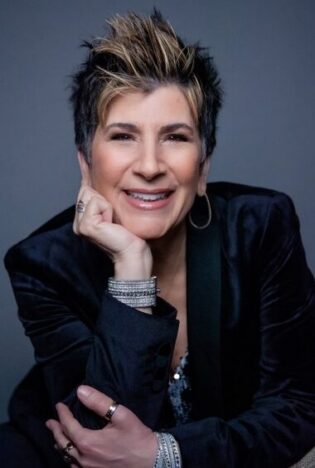
“I didn’t want to kiss Durante’s nose,” Meringolo told me in a recent phone interview. “I don’t think anybody else really wants to either. And there are probably people who don’t even know who [Jimmy Durante] is.”
Meringolo wound up changing the line to, “I’d like to kiss you all on the nose.” This alteration required that an extra syllable (and thereby an extra note) be added to the song. But it was a minor change, and it worked fine for her.
Cabaret singers alter the lyrics of a song for an array of reasons. The song’s pronouns may not jibe with their own gender identity or sexual preference. The song may contain confusing, out-of-date references or, worse, embrace outmoded cultural attitudes having to do with race or ethnicity: words that could instantly alienate some listeners.
Singers may want to personalize a song to include allusions to the content of their own lives. They may want to replace lyrics from a show tune because the words don’t make sense outside of the context of the musical for which they were written (the references to “Papa” in Gypsy’s “Some People,” for instance). They may even choose to write brand-new lyrical passages—perhaps to create a parody, perhaps just to make a short song longer.
My sense is that singers generally feel more at ease with changing a song’s melody line and/or rhythm than they are with altering a lyric. What singer would shy away from embellishing a melodic phrase or bestowing a samba beat on a song that’s customarily presented as a waltz? Some may worry that they’ll face legal troubles if they mess too much with a lyric. But, as Michael Kerker, director of Musical Theatre for ASCAP, confirms, there’s considerable leeway for singers who perform in cabaret clubs that have music-licensing agreements with performing rights organizations. Also, song parodies are constitutionally protected in the U.S. A 1994 “fair use” decision by the U.S. Supreme Court cemented that doctrine.
However, if you take your show to a theatrical venue instead of a cabaret club, that could be a different story: You’d be wise to have either the lyricist, the lyricist’s estate, or the relevant music publisher vet any changes you wish to make. And if it’s a recording of the song, such vetting is a must.
Cabaret favorite Jeff Harnar told me that when he recorded an album of songs by composer Cy Coleman, he wished to include a mashup of “My Personal Property” (from the musical Sweet Charity) and “My City” (from another Coleman show, Seesaw). Cabaret director Barry Kleinbort had written a new lyric for “My City” that Harnar found “brilliant.” It updated the cultural references to New York City, replacing those from the 1973 show. The record label, P.S. Classics, ran the idea by the estate of Seesaw’s lyricist, the late Dorothy Fields.

“They said absolutely no,” recalled Harnar. “They said, ‘He’s got to record what was written [by Fields] or not record it.” So Harnar wound up singing Fields’s original lyric on his recording. He was assured, however, there was no problem should he choose to sing Kleinbort’s revised lyric in a club setting.
He, she, and sometimes they
Undoubtedly, the most frequent and time-honored alteration to a lyric involves the simple shifting of pronouns so that women (presumably, heterosexual women) can sing songs originally performed by men, and vice versa. So, with George Harrison’s “Something,” the pronoun could be changed to create the line, “Something in the way he moves attracts me like no other lover.” (This elementary step allowed everyone from Patti Page to Della Reese to Barbara Mandrell to have a crack at the Beatles favorite.)
Or course, in some songs, more than just pronouns may need to be adjusted. In the familiar refrain of Rodgers & Hart’s “My Funny Valentine,” Lorenz Hart uses second person (“you/your”) pronouns for the love object, which works for any singer. However, the last phrase of the frequently dropped introductory verse identifies the loved one as a “slightly dopey gent.” If a man sings that line, listeners these days may, understandably, assume that a same-sex male romance is about to be described.
Interestingly, many decades ago—in a simpler, less-analytical time—singers apparently didn’t fret much about such point-of-view adjustments. One of Judy Garland’s signature songs was “For Me and My Gal,” which features a parson waiting at the altar to officiate at Judy’s wedding to her gal pal. The “context” of Garland’s performance of this song was simply that she was presenting an old (1917) chestnut of a song. Often, she performed it with a male duet partner (as she did with Gene Kelly in the 1942 film with the same title) or, in the case of her famous 1961 Carnegie Hall performance, as part of an audience sing-along. Few people, if any, were picturing two bride figurines atop a wedding cake.
Even more puzzling to our ears today would be Al Jolson’s rousing rendition of 1921’s “I’m Just Wild About Harry.” Back in the day, nobody seemed to have a problem with Jolie’s enthusiastic proclamation that “the heav’nly blisses of [Harry’s] kisses” filled him “with ecstasy.” (Which doesn’t mean people back then were waving rainbow flags as he carried on about the guy.)
Singer Natalie Douglas noted in a phone chat with me that in some of her many tribute shows, she tends to retain a man’s perspective if she is paying homage to a male singer— Elvis Presley, Sammy Davis Jr., or Nat King Cole, for instance.
“I want to capture something of the flavor that they gave to a song. Because, otherwise, it’s just me singing ‘When I Fall in Love.’ If I don’t do something that’s reminiscent of Nat’s arrangement, there’s kind of no point to me singing it in that specific show.” And that “something” can include retention of the male perspective.
If she were to sing the song in a non-tribute context, however, she might be more inclined to put more of her own stamp on it. Or maybe not.
“I’m not going to make a pretzel out of singing pronouns anymore. It’s very freeing. It just makes me sad I didn’t have the courage earlier, but I really was trying to play venues [where] I hadn’t believed I could sing those pronouns.” –Jeff Harnar
For singers these days who identify with one or more of the letters in “LGBTQ,” the choice to adjust or not adjust lyrics to match their own gender identity and/or sexuality can be a career-defining dilemma. Or sometimes not.
In Meringolo’s case, it came relatively easy. From an early age, she embraced the idea of singing songs from the perspective of a gay woman. She would sing “Go Away, Little Girl” as written, and she changed the phrase “Little Boy Lost” in the song “Pieces of Dreams” (music by Michel Legrand, lyric by Marilyn and Alan Bergman) to “Little Girl Lost.” (She explained that she did the latter because she was referencing herself in the song.)
Once, at a piano-bar performance, she sang an altered version of the Bergmans’ lyric for “Fifty Percent” (from the musical Ballroom) to make the lover in the song female instead of male. An outraged woman in the audience asked her how she dared alter the lyric. On another occasion, however, when she sang the number at a Bergmans tribute show, the song’s composer, Billy Goldenberg, greeted her after the performance and said, “I just want to thank you for bringing my song full circle.”
“I thought that was the sweetest and coolest thing to hear,” Meringolo said. (And the Bergmans themselves were fine with the change as well.)
Harnar had some difficulty in reaching his decision to cease presenting a faux-heterosexual persona in his shows. Eventually, though, he made the move. When he’d first performed his Betty Comden and Adolph Green tribute show in 1989, he’d sung the song “I Met a Girl” from Bells Are Ringing. When he revived the show later, the number was out—and so, at last, was he.
“I’m not going to make a pretzel out of singing pronouns anymore,” he said. “It’s very freeing. It just makes me sad I didn’t have the courage earlier, but I really was trying to play venues [where] I hadn’t believed I could sing those pronouns—at the Algonquin or on cruise ships or in performing arts centers. Yeah, I was afraid.”
Bringing old tunes up to date
Some older American Songbook titles—list songs from Cole Porter, for instance—allude to people, places, and things that mean little if anything to listeners today. For his Porter show, Harnar wrote some sparkling new lyrics that were inserted as a conclusion to “I’m Throwing a Ball Tonight” (1940). They imagined the things Porter might have explored topically if he had written the song in the 21st century.
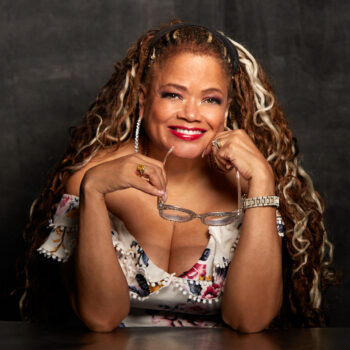
Other older songs have lyrics that are problematic for cultural reasons—lyrics that can be laced with various sorts of bigotry.
Some people just avoid such songs altogether. For instance, when Harnar and Shauna Hicks presented a Judy Garland / Mickey Rooney show, they “jettisoned” all songs connected with film segments in which the stars had appeared in blackface.
Douglas has become acutely aware of titles in the American Songbook that contain casual (or not-so-casual) racist language.
She pointed to a 1941 Frank Sinatra / Tommy Dorsey recording of “Moonlight Bay,” originally a 1912 song by lyricist Edward Madden and composer Percy Wenrich. Somehow, over the years, a reference to “darkies singing” found its way into the song—a lyric that is, in fact, heard on the Sinatra recording. There were no such words in Madden’s original lyric, which instead mentioned “voices ringing.” But “darkies singing” was the lyric in a different song of a similar style (“In the Evening by the Moonlight”), and those words apparently somehow crept into “Moonlight Bay.”
Never, of course, would Douglas perform a lyric like this without historical context. However, she has performed another song, Ray Henderson and Lew Brown’s “That’s Why Darkies Were Born,” in her “Freedom” shows, because it helps her make a point about racism. (Black singer and activist Paul Robeson also sang the number for such a purpose, early in the song’s history.)
Douglas, like Harnar, advised that sometimes the best thing to do when a song contains dicey lyrics is not to change it but to look for a different song, one that better says what you want to say or better creates the mood you want.
Or, at least, you can excise the questionable parts
She urged one young singer she was working with to cut a verse from Eddie Cooley and Otis Blackwell’s “Fever,” because of a lyric that mischaracterizes as a steamy romance the relationship between two historical figures: explorer John Smith and the indigenous figure referred to as Pocahontas (who was actually named “Amonute”), someone who was a mere child when she knew Smith.
Nobody is forcing a singer to eradicate potentially offensive language or ideas from a song, said Douglas. There are no “cabaret police.” But for her own shows, she wants to create an atmosphere in which everyone feels welcome and happy to be in the room.
Sometimes, she explained, a song can create its own reality in spite of lyrics that are seemingly off target.
Like other Black performers, including Sammy Davis Jr., and Nina Simone, Douglas has sung Jerry Jeff Walker’s 1968 pop song “Mister Bojangles.” She is aware that this number was inspired by a circa-1966 incident when Walker encountered a street dancer in a drunk tank in a New Orleans jail. At times in his life, Walker insisted that that cellmate was actually a white man nicknamed “Bojangles.” Despite her knowledge of all this, Douglas has sung the number as an homage to the Black tapdancing star Bill (“Bojangles”) Robinson (1878-1949) and other pioneering Black performers.
“My intention with that song is honoring Black artists who paved the way,” she said. “Sometimes, it’s ‘where you come from’ when you’re singing [a song] as written, not so much changing the actual lyrics of the tune.”
Major overhauls of a song
Some artists will change a song (and sometimes extend it) by adding lyrics that personalize it with content from their own lives. Stephen Sondheim’s “I’m Still Here” has, of course, been retrofitted for multiple living legends. Douglas noted that cabaret stalwart Marilyn Maye has added new lyrics to the song “Here’s to Life”— words that address her own career as a singer.
Then, of course, there are outright parodies. From Allan Sherman’s “Hello Muddah, Hello Fadduh” to Forbidden Broadway to Randy Rainbow’s scathing (and hilarious) political songs, parody is a song genre that has thrived and delighted anyone who has ever gleefully sung, “Happy birthday to you. / You belong in the zoo.” to irk a playmate on the playground.
Harnar loves writing parody lyrics, and he recently created some that greatly pleased audiences at the American Popular Song Society’s show honoring Sidney Myer. Updating the lyrics from Bye Bye Birdie’s “Rosie” (and changing the title to “Sidney”), he strove to include as many song titles and remarks associated with Myer as he could pack into the song.
“I did my best to have the internal rhymes match, as well as the ones at the end of [lines]. … And I had to make it scan. I don’t think it’s real if you have to futz around with the melody—adding a whole bunch of syllables.”
Said Meringolo (who attended the Myer tribute) of Harnar’s “Rosie” revamp, “It was brilliant… unbelievable.”
As a director, Harnar has also helped such singers as Therese Lee and Becca Kidwell with their parody songs. He said that he insisted that they follow the same standard of precision in rhyme and rhythm that he uses for his own parodies.
Lyrics du jour
Some singers like to ad lib a lyric occasionally: spontaneously alluding to something topical or something happening in the showroom (a cocktail glass shattering, the room’s icy or toasty temperature), usually for comedic effect. However, for the singers I spoke with, this is something that happens rarely.
Harnar does recall singing Cole Porter’s “It’s De-Lovely” in a cruise ship show. Toward the end of the song, while he was singing, “It’s delightful, it’s delicious, it’s delectable…” etc., the cummerbund accessorizing his tux popped off, and he promptly sang the line, “It’s de cummerbund.” But that was a one-off instance.
When asked about such off-the-cuff lyric-changes, the performers I spoke with agreed that these adjustments happen most often when the singer “goes up” on a lyric. Saving a song with on-the-spot improvisation when memory fails has become an art over the decades. Sometimes it works magnificently (Ella Fitzgerald’s Grammy-winning “Mack the Knife,” recorded live at a Berlin concert), and sometimes it can be excruciating (Leslie Uggams’s notorious (though valiant) television performance of “June Is Bustin’ Out All Over,” which went haywire (and, eventually, viral) because she couldn’t see the prepared cue cards.
Memory lapses happen to all singers. But when changes in wording occur merely because the singer is sloppy or is playing fast and loose with the lyrics, that’s a different story. Douglas remarked that those jazz singers who see themselves as just another instrument in the band tend at times to go freestyle with the lyrics.
What results might fall somewhere on the spectrum between what the lyricist wrote and scat-singing. Or, consider what Sinatra did with the words to Kander and Ebb’s “New York, New York.”
“They hated it all the way to the bank,” said Harnar.
Sometimes singers mess up a lyric by relying on inaccurate transcriptions of a song—these days, often transcriptions found online. (Sometimes when Douglas hears someone sing a wrong lyric, she knows exactly the source that led to the mistake.) It’s best to rely on the authority of published sheet music.
“If there’s a valid reason for changing the lyric, I can sort of get behind that,” said Douglas. “But if it’s just a sort of cavalier attitude toward the lyric, that really bothers me.”
In one case, she actually helped a songwriter by inadvertently changing a lyric. She was recording a demo of a song by musical-theatre writer Rob Hartmann. In the middle of the recording, Hartmann stopped her and said, “Sing that line again.”
It turned out she had mis-sung words in the line. “I didn’t change the sense of it. I had just shifted the words a little.”
After she’d repeated the line the way she’d sung it before, Hartmann said, “That’s better than what I wrote.”
Her improvement stayed in the song.
I imagine people have asked for co-writing credit for smaller contributions than Douglas’s. But she was satisfied with a very welcome compliment.
###

About the Author
Mark Dundas Wood is an arts/entertainment journalist and dramaturg. He began writing reviews for BistroAwards.com in 2011. More recently he has contributed “Cabaret Setlist” articles about cabaret repertoire. Other reviews and articles have appeared in theaterscene.net and clydefitchreport.com, as well as in American Theatre and Back Stage. As a dramaturg, he has worked with New Professional Theatre and the New York Musical Theatre Festival. He is currently literary manager for Broad Horizons Theatre Company.