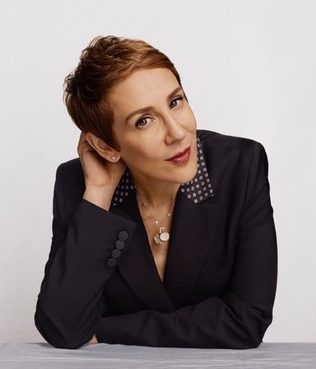
Stacey Kent sings from a part of the jazz vocal tradition that I particularly admire. She’s one of the post-Anita O’Day singers who has found her lane in a mellow groove. Her sound is perfect for Brazilian styles, technically accomplished, with even tone and dynamic markings peaking at mezzo forte. She doesn’t need to shout about anything. This makes lyrics and stories prominent, accents her subtle rhythmic choices, and it’s a great approach for a “listening” singer who mixes her voice with the band. She’s not trying to cut through the other sounds on stage; she’s blending and collaborating. Kent makes it sound as easy as breathing. Eleven studio albums and a Grammy nomination later, this is a well-earned proficiency and it’s exciting to see her quintet return to performing live at Birdland.
Opening with “Make It Up” (Jim Tomlinson, Cliff Goldmacher), a spirited samba about improvising in love, Kent set the tone for a relaxing time together, seated on a stool and looking happy to be back. Flute and reeds are such a good choice for Kent’s voice, and Kent’s collaborator in music and life, Jim Tomlinson, made notable contributions to the evening. “Dindi” (Antônio Carlos Jobim; Aloysio de Oliveira; English lyrics, Ray Gilbert) flowed forward, introducing solos for TomHubbard on bass and Art Hirahara on piano. Drummer Anthony Pinciotti had an understated but important presence throughout. “I Wish I Could Go Travelling Again” (Kazuo Ishiguro, Tomlinson) was a wistful imagining of some kind of imperfect but charming Riviera trip. “My Ship” (Kurt Weill, Ira Gershwin) is a chestnut, but it was fresh and immediate here: you could imagine Kent looking longingly across the sea, and it’s delicious to hear her sing textural words like “silk” and “pearls.” Paul Simon’s “American Tune” was pared down here to just piano and vocals; brought back to its roots as a simple hymn. The waltz “Imagina” (Jobim, Chico Buarque) had virtuosic cascades of Portuguese lyrics, which Kent flew through effortlessly.
With this consistent leaning toward bossas and ballads, I found it took some time to transition from the outside world’s fast texts and crowded subways into the slower pace and subtlety of the set, but by the time we had reached Kent’s absolutely lovely “Les Eaux de Mars”—Georges Moustaki’s French translation of Jobim’s “Águas de Março” (Waters of March)—I had truly settled into this smooth journey. Kent’s French is crisp and full of papery edges; she gently slices off each word. If you’re seeking soothing from this exhausting world, you may want to slide into Kent’s current album with Hirahara: Songs From Other Places.
Penelope Thomas is a performer, writer, and communications consultant. Credits include lead vocals for two albums with prog rock band FauveMuseum; background vocals with Shellen Lubin, and US & UK tours of Mikel Rouse’s ‘The End of Cinematics.’ She’s read poet Anne Carson’s work at The Whitney Museum and played leads in HBO Women in Comedy Festival-selected film Pretty Dead and the upcoming indie film, “The Interview.” She studied voice with Norma Garbo, music theory with bassist Mark Wade, LoVetri Somatic Voicework through Baldwin Wallace University, and acting with Deena Levy. She taught in the New School’s Sweat musical theatre intensive. With a degree in Cultural Studies & Anthropology and a background in contemporary dance, Penelope loves thinking and writing about performance—connecting the dots between styles and genres and supporting the connection between artists and audiences.